
Main Hall > Southside > Frederick Douglass
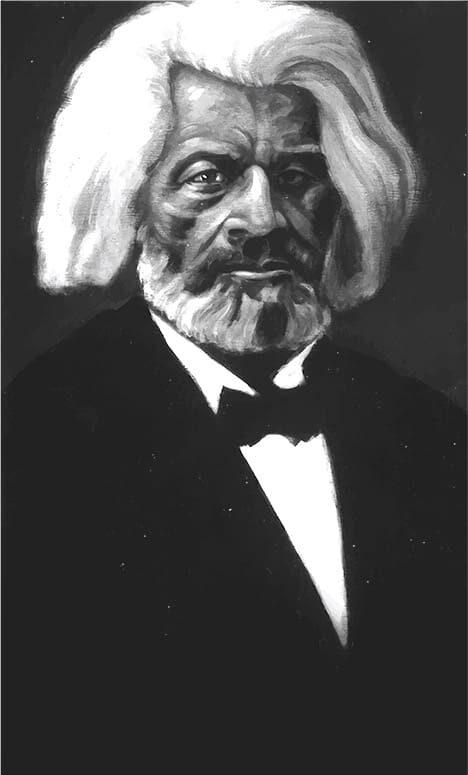
Frederick Douglass
Frederick Douglass, perhaps the most notable African American social reformer, abolitionist, and statesman of his time, escaped slavery in 1838. He became pivotal in the abolitionist movement and was celebrated for his stirring oratory and intellectual might. He also actively advocated for women’s rights, attending the Seneca Falls Convention 1848. Douglass, criticized for his controversial alliances, famously stated he would “unite with anybody to do right and with nobody to do wrong.” He met with President Lincoln three times, regarding him as “emphatically the Black man’s president.”
Frederick Douglass, perhaps the most notable African American social reformer, abolitionist, and statesman of his time, escaped slavery in 1838. He became pivotal in the abolitionist movement and was celebrated for his stirring oratory and intellectual might. He also actively advocated for women’s rights, attending the Seneca Falls Convention 1848. Douglass, criticized for his controversial alliances, famously stated he would “unite with anybody to do right and with nobody to do wrong.” He met with President Lincoln three times, regarding him as “emphatically the Black man’s president.”
Frederick Douglass
Frederick Douglass, perhaps the most notable African American social reformer, abolitionist, and statesman of his time, escaped slavery in 1838. He became pivotal in the abolitionist movement and was celebrated for his stirring oratory and intellectual might. He also actively advocated for women’s rights, attending the Seneca Falls Convention 1848. Douglass, criticized for his controversial alliances, famously stated he would “unite with anybody to do right and with nobody to do wrong.” He met with President Lincoln three times, regarding him as “emphatically the Black man’s president.”