
Main Hall > Southside > Martin Luther King Jr.
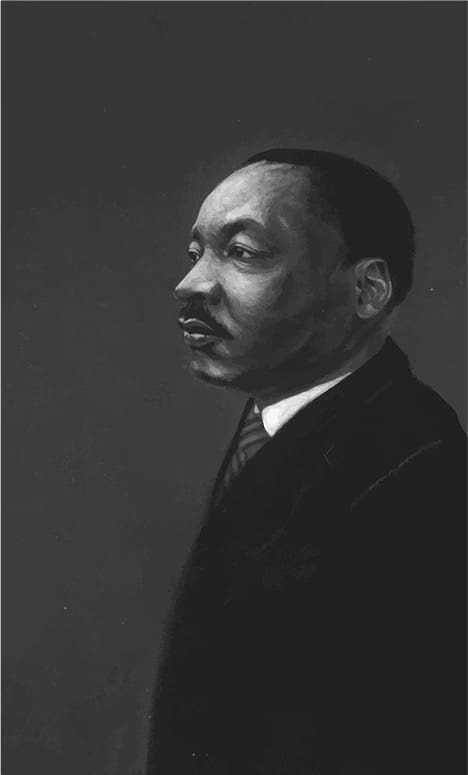
Martin Luther King Jr.
Widely recognized as the most prominent civil rights movement figure, Martin Luther King Jr. led nonviolent protests such as the Montgomery Bus Boycott and the 1963 March on Washington, where he delivered his iconic “I Have a Dream” speech. His efforts were instrumental in the passage of the Civil Rights Act of 1964 and the Voting Rights Act of 1965. The youngest recipient of the prestigious Nobel Peace Prize in 1964, King remains a symbol of justice and equality, influencing young and old to pursue the dream of nonviolent paths to peace and equality. King was assassinated on April 4, 1968, in Memphis, Tennessee.
Widely recognized as the most prominent civil rights movement figure, Martin Luther King Jr. led nonviolent protests such as the Montgomery Bus Boycott and the 1963 March on Washington, where he delivered his iconic “I Have a Dream” speech. His efforts were instrumental in the passage of the Civil Rights Act of 1964 and the Voting Rights Act of 1965. The youngest recipient of the prestigious Nobel Peace Prize in 1964, King remains a symbol of justice and equality, influencing young and old to pursue the dream of nonviolent paths to peace and equality. King was assassinated on April 4, 1968, in Memphis, Tennessee.
Martin Luther King Jr.
Widely recognized as the most prominent civil rights movement figure, Martin Luther King Jr. led nonviolent protests such as the Montgomery Bus Boycott and the 1963 March on Washington, where he delivered his iconic “I Have a Dream” speech. His efforts were instrumental in the passage of the Civil Rights Act of 1964 and the Voting Rights Act of 1965. The youngest recipient of the prestigious Nobel Peace Prize in 1964, King remains a symbol of justice and equality, influencing young and old to pursue the dream of nonviolent paths to peace and equality. King was assassinated on April 4, 1968, in Memphis, Tennessee.